Showing posts with label Seni grafis. Show all posts

African Christianity in Ethiopia


    • Processional Cross, 14th–15th century, before 1400 (?)
      Ethiopia, Lalibela
      Brass (cast)

      H. 10 1/2 in. (26.7 cm)
      Purchase, Elaine Rosenberg Gift and funds from various donors, 1998 (1998.37)

    • Double-Sided Gospel Leaf, first half of 14th century
      Ethiopia; Tigray region
      Tempera on parchment

      11 x 7 1/2 in. (27.8 x 19 cm)
      Purchase, Oscar de la Renta Ltd. Gift, 2005 (2006.100)

    • Page from an Illuminated Gospel, late 14th century
      Ethiopia, Highland region
      Parchment (vellum), wood (acacia), tempera, ink

      H. 16 1/2 in. (41.9 cm)
      Rogers Fund, 1998 (1998.66)

    • Processional Cross, 16th century (ca. 1500)
      Ethiopia, Tigray region; Amharic
      Wood, tin

      H. 18 x W. 8 1/2 in. (45.7 x 21.6 cm)
      Rogers Fund, 1999 (1999.103)

    • Ewost'atéwos and Eight Disciples, late 17th century
      Ethiopia
      Wood, tempera

      H. 22 in. (56 cm)
      Louis V. Bell Fund, 2006 (2006.98)

    • Pendant Icon, 17th–18th century
      Ethiopia; Amharic
      Wood, tempera paint

      H. 3 3/4 in. (9.53 cm), W. 2 3/4 in. (6.96 cm)
      Rogers Fund, 1997 (1997.81.1)


    The adoption of Christianity in Ethiopia dates to the fourth-century reign of the Aksumite emperor Ezana. Aksum's geographic location, at the southernmost edge of the Hellenized Near East, was critical to its conversion and development. The kingdom was located along major international trade routes through the Red Sea between India and the Roman empire. The story of Ezana's conversion has been reconstructed from several existing documents, the ecclesiastical histories of Rufinus and Socrates Scholasticus. Both recount how Frumentius, a youth from Tyre, was shipwrecked and sent to the court of Aksum. Frumentius sought out Christian Roman merchants, was converted, and later became the first bishop of Aksum. At the very least, this story suggests that Christianity was brought to Aksum via merchants. Ezana's decision to adopt Christianity was most likely influenced by his desire to solidify his trading relationship with the Roman empire. Christianity afforded the possibility of unifying the many diverse ethnic and linguistic peoples of the Aksumite kingdom, a goal of Ezana's leadership. Aksum was one of the earliest states to develop a coin system in order to service its sophisticated and prosperous economy. Emperor Ezana was the first world leader to put the cross on coins that are the earliest examples of Christian material culture from Ethiopia.


    The adoption of Christianity in Ethiopia dates to the fourth-century reign of the Aksumite emperor Ezana. Aksum's geographic location, at the southernmost edge of the Hellenized Near East, was critical to its conversion and development.


    Related

    Timelines (5)

    • Eastern Africa, 1600–1800 A.D.
    • Eastern Africa, 1800–1900 A.D.
    • Eastern Africa, 1900 A.D.–present
    • Eastern and Southern Africa, 1000–1400 A.D.
    • Eastern and Southern Africa, 1400–1600 A.D.

    Thematic Essays (13)

    • African Christianity in Kongo
    • African Influences in Modern Art
    • Aksum
    • Byzantine Art under Islam
    • Byzantium (ca. 330–1453)
    • The Cult of the Virgin Mary in the Middle Ages
    • Ethiopia's Enduring Cultural Heritage
    • Europe and the Age of Exploration
    • Kingdoms of the Savanna: The Kuba Kingdom
    • Monasticism in Medieval Christianity
    • The Roman Empire (27 b.c.–393 a.d.)
    • Trade and the Spread of Islam
    • Ways of Recording African History

    Maps (2)

    • Africa, 1400–1600 a.d.
    • World, 1400–1600 a.d.

    Index Terms (25)

    Geography/Place

    • Eastern Africa

    Material and Technique

    • Brass from Africa and Egypt
    • Carved Wood
    • Miniature Painting from Africa and Egypt
    • Painting in Tempera on Wood
    • Sculpture in the Round from Eastern Africa
    • Sculpture in the Round in Wood
    • Vellum

    Object

    • Christian Architecture
    • Christian Book
    • Christian Icon
    • Christian Manuscript
    • Christian Painting
    • Christian Sculpture in the Round
    • Cross
    • Pendant
    • Regalia

    Subject Matter/Theme

    • Christ
    • Icons and Iconoclasm
    • Liturgical Books
    • Madonna and Child
    • Mother and Child
    • Saint from Africa and Egypt
    • Saint George
    • Trade and Travel (1400–1600 A.D.)

    Share

      | More

    Remains of distinctive Aksumite church architecture have been located in Aksum, Matara, and Adulis. These are oriented basilicas with stepped podia, which are accessed by a monumental set of stairs. These churches include an apse with lateral square chambers, introduced into the design of basilicas along the south coast of Asia Minor, Syria, and Palestine by the fifth century. The construction of churches is believed to have served the religious needs of the new administrative and military officials settling in expanded territories. The growth of the Aksumite state ended after the Persian conquest of South Arabia, which displaced the trade routes of the Red Sea.

    While its origins are unclear, the Zagwe dynasty arose sometime during this period of reduced wealth and international prestige and probably lasted until 1270. The almost complete lack of surviving manuscripts makes it difficult to obtain a clear picture of the period. After the abandonment of Aksum, the previous political and economic capital, the city of Roha, now called Lalibela, was established as the ceremonial center of the Zagwe dynasty. Churches most likely based on Aksumite precedents were hewn out of living rock in the mountains of Lasta. The Church of the Redeemer, the largest and perhaps most famous church at Lalibela, may be an architectural copy of the Cathedral of Mary of Zion at Aksum. The interiors of these magnificent structures were covered with paintings and murals.

    Yekunno Amlak's overthrow of the reigning Zagwe dynasty in 1270 marks the beginning of the Early Solomonic period (1270–1530). Amlak based his claim to legitimacy on an alleged lineage with the ancient rulers of Aksum originating with King Solomon and the Queen of Sheba. This period was one of dramatic social and cultural change and development. Extensive international trade returned to Ethiopia since Europeans were seeking alternatives to trading along Islamic-controlled routes. This resurgence lasted until the Portuguese rounded the Cape of Good Hope. Evoking the legend of King Solomon, rulers of this period established royal churches lavishly decorated with wall paintings, gold ornamentation, and precious fabrics. These included the famous rock-hewn churches of Tegre and Lasta. Through affiliations with monastic leaders, these secular rulers used artistic patronage, including the recruitment of European artisans, to establish their authority and enhance their prestige. This interface with Europe exposed Ethiopian artists to new mediums, technologies, and aesthetic sensibilities. These influences are reflected in wall paintings through a shift from rigid frontality and the widespread use of geometric patterning to a three-quarter pose, a greater fluidity of line, and the use of modeling to describe three-dimensional volumetric figures. This new style contained elements of both Byzantine and Italian prototypes.

    Monasteries, for example the Dabra Hayq Estifanos monastery in Amhara, were established as centers of learning. These complexes often contained extensive scriptoria for extraordinary illuminated manuscripts, of which very few survive. The labor-intensive work of the scriptorium was often considered a crucial dimension in a monk's spiritual training. There were many monasteries in the region of Lake Tana, including that of Fré Seyon, one of two known artists of this period. Seyon is credited with the development of the devotional Marian Icon images and style. Mary became an extremely important figure in the Ethiopian church when Emperor Zar'a Ya'eqob (r. 1434–68) mandated the reading of the Miracles of the Virgin Mary and that she be honored at most of the thirty feast days in the liturgical year. Zar'a Ya'eqob was particularly successful at utilizing the power of her visual imagery to publicly emphasize teachings about her centrality to Christian salvation.

    The Islamic jihads of 1531 through 1543 by the neighboring state of Adal destroyed many royal churches, libraries, and monasteries, resulting in the loss of all of their records. Rare examples of the extraordinary royal patronage of the Early Solomonic period that survived were preserved in extremely remote, inaccessible monasteries. A long period of chaos followed the Adalite invasion, including subsequent incursions by enterprising groups seeking to fill the power void left by the fall of the Aksumites. In the seventeenth century, the significantly reduced Christian empire established the new capital of Gondar. Until its assault by Tigray in 1769, Gondar was the spiritual, artistic, and political center of the empire and therefore was a site for the principle scriptoria and painters' workshops, as well as architectural innovations.

    While earlier Aksumite churches were circular, later constructions deliberately attempted to mimic those of the description of King Solomon's temple in the Old Testament. The churches built in Gondar have a square sanctuary with two aisles running along the periphery. The interiors are entirely covered in both murals and paintings that were commissioned by the wealthy elite in order to assist in their ascension to heaven. This was a period of intense artistic production, including, in particular, considerable quantities of icons devoted to the Virgin Mary.

    The Ethiopian royal dynasty remained intact until the overthrow in 1974 of Haile Selassie, the last Christian emperor, by a military coup.


    Source: African Christianity in Ethiopia | Thematic Essay | Heilbrunn Timeline of Art History | The Metropolitan Museum of Art

    Woodcut Book Illustration in Renaissance Italy: The First Illustrated Books Source: Woodcut Book Illustration in Renaissance Italy: The First Illustr


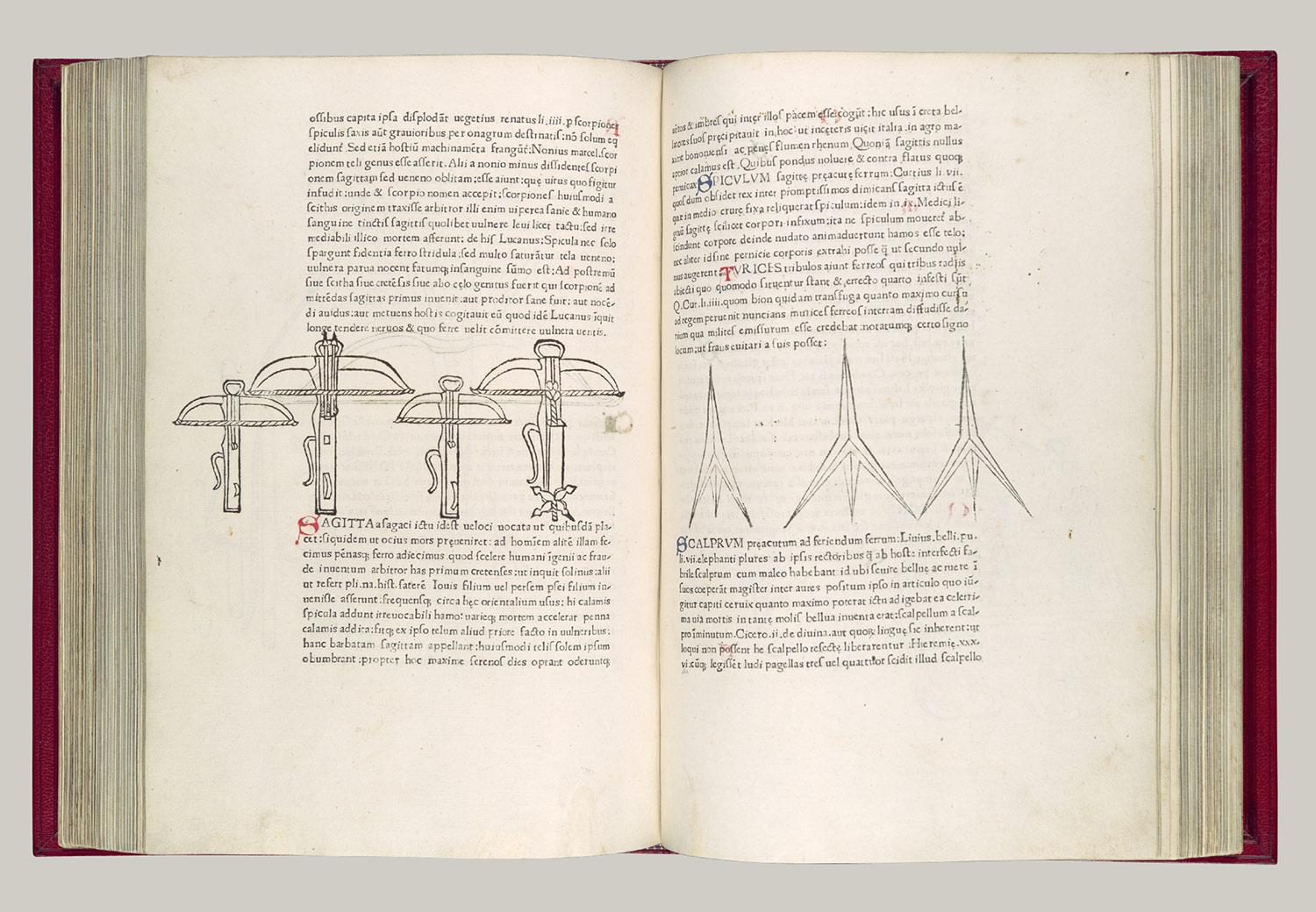
    • De re militari (On the Military Arts): Folios 161v and 162r
      Author: Roberto Valturio (Italian, 1405–1475)
      [Verona:] Johannes Nicolai de Verona, 1472
      Printed book with woodcut illustrations printed separately; captions and initials added by hand

      13 x 9 7/16 x 1 7/8 in. (33 x 24 x 4.8 cm)
      Harris Brisbane Dick Fund, 1926 (26.71.4)

    • [Aesopus moralitus] Vita, Fabulae (The Moralized Aesop; Life, Fables): Folio 4v
      Author: Aesop
      Translator and editor: Francesco del Tuppo
      Naples: Francesco del Tuppo, February 13, 1485
      Printed book with woodcut (or metalcut?) illustrations

      11 1/4 x 8 1/4 x 7/8 in. (28.5 x 21 x 2.3 cm)
      Harris Brisbane Dick Fund, 1931 (31.62.9)

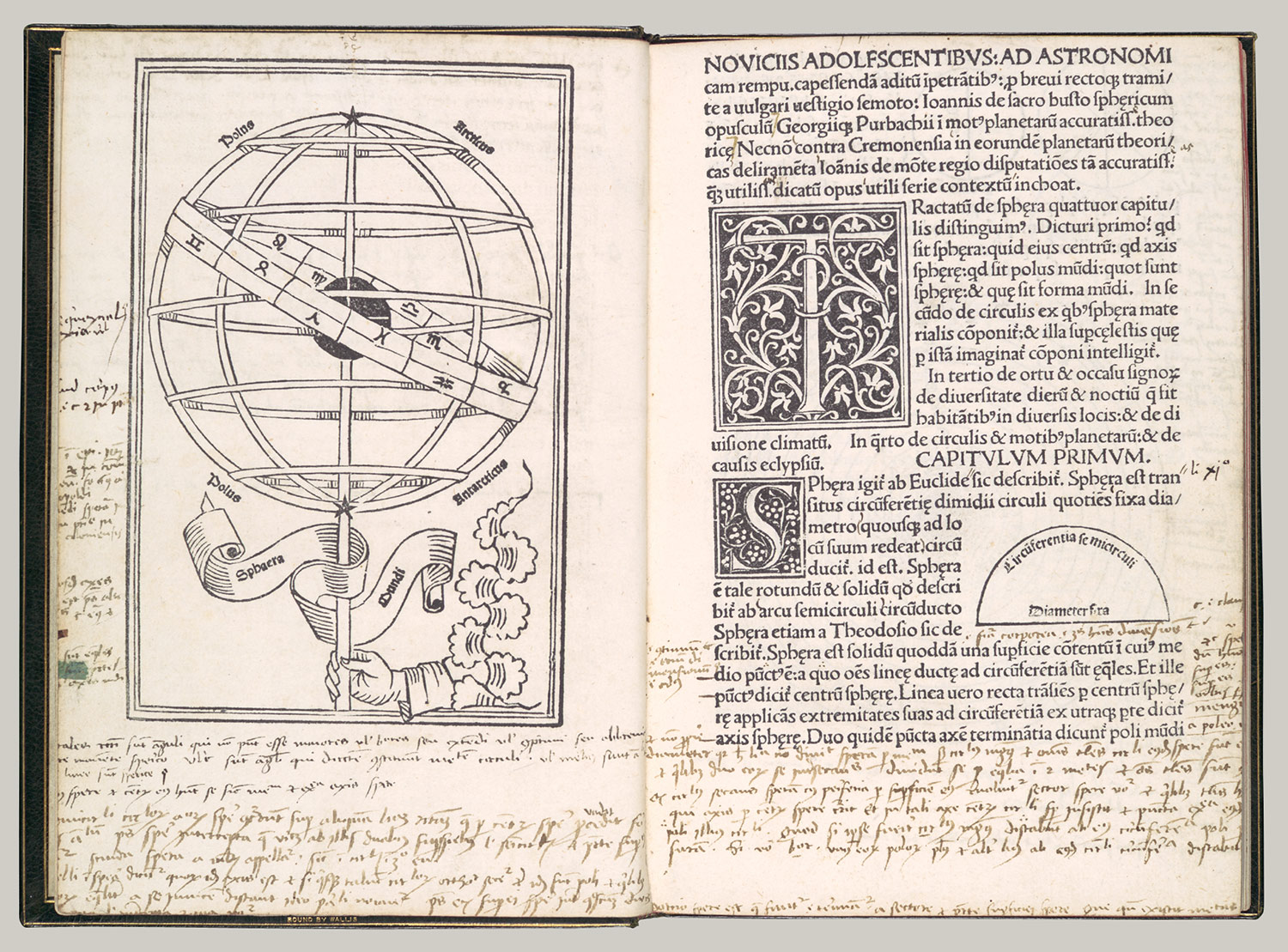
    • Sphaera Mundi [with other tracts]: Sphaera cum Theorcis Disputationibus Johannis Regiomontani contra Cremonensium Deliramenta Theoricas: Signatures 11v and 22
      Authors: Johannes de Sacrobosco (John Holybush, died 1256); Regiomontanus (Johannes Müller of Königsberg, 1436–1476); Georg von Peuerbach (1423–1461)
      [Venice:] Erhard Ratdolt, 1485
      Printed books with woodcut illustrations printed in one, two, and three colors of ink

      7 5/8 x 5 3/8 x 1/2 in. (19.4 x 13.6 x 1.2 cm)
      Gift of Paul J. Sachs, 1917 (17.45)

    • Meditationes passionis Christi; Devote meditatione sopra la passione del nostro Signore (Devout Meditations on the Passion of Our Lord): The Raising of Lazarus, opening page (folios 1v and 2r)
      Author: Pseudo-Bonaventura
      Venice: Hieronymus de Sanctis & Cornelio, 1487
      Printed book with woodcut illustrations

      8 11/16 x 6 5/16 x 1/2 in. (22 x 16 x 1.3 cm)
      Harris Brisbane Dick Fund, 1933 (33.17)

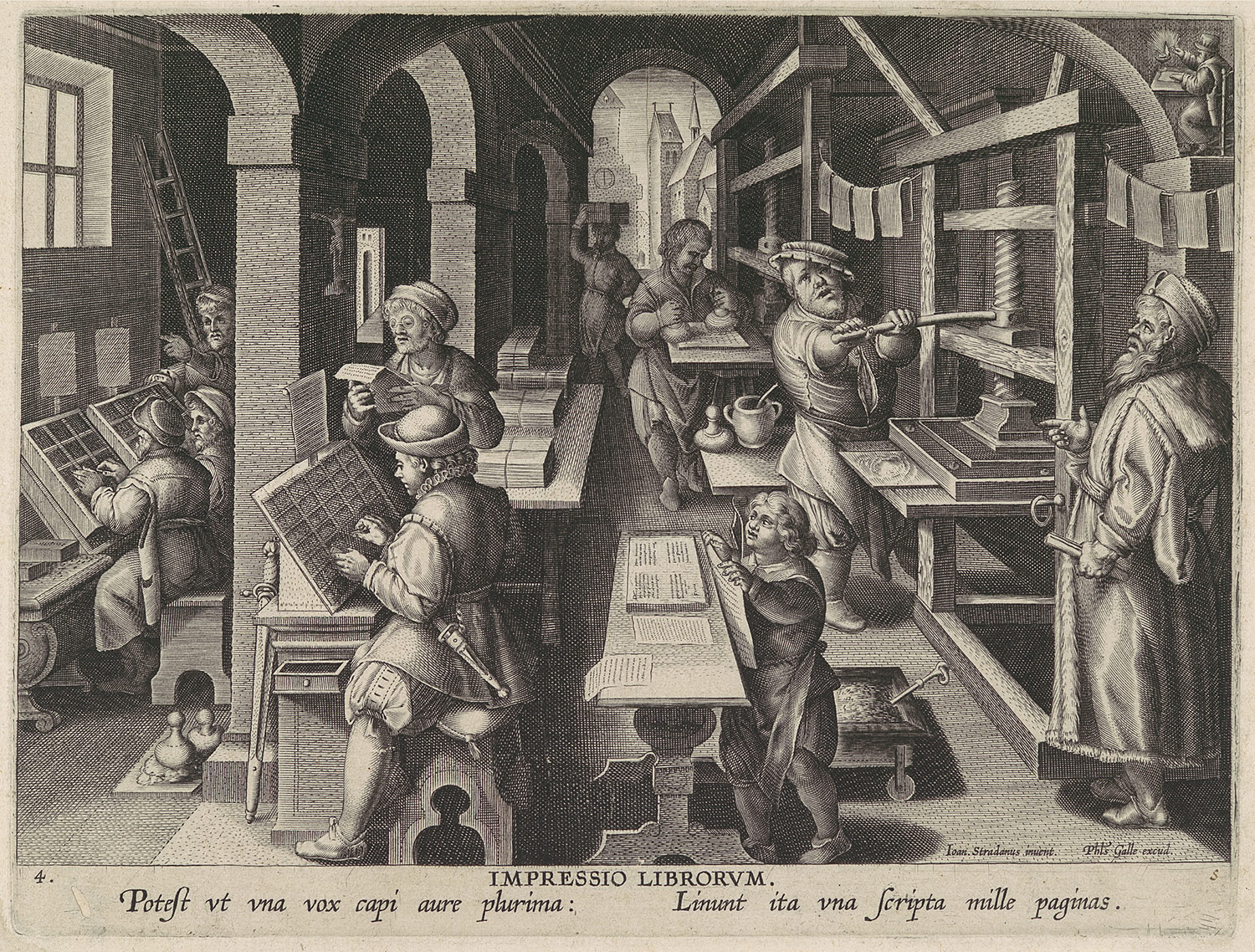
    • Impressio Librorum (Book Printing): Plate 4 of the Nova Reperta (New Discoveries)
      Theodor Galle (Flemish, 1571–1633), after Stradanus (Jan van der Straet) (Netherlandish, 1523–1605)
      Antwerp: Philips Galle, late 16th century
      Engraving

      plate: 7 7/8 x 10 3/8 in. (20 x 26.4 cm), sheet: 9 7/8 x 12 7/8 in. (25.1 x 32.8 cm)
      Harris Brisbane Dick Fund, 1934 (34.30 [5])


    The golden age of Italian woodcut illustration began in the last quarter of the fifteenth century and lasted for roughly 100 years, during which period some of the most harmonious and delightful books ever produced issued from Italian presses. The woodcuts designed for these books, in which one can find the graceful refinement of Botticelli, the monumental classicism of Mantegna, the idealized naturalism of Titian, and the mannered elegance of Salviati, are among the most beautiful prints of the Italian Renaissance.

    Within a decade of its invention, the printing press had been introduced into Italy by the Germans Conrad Sweynheym and Arnold Pannartz, who in 1464 set up a press at the Benedictine monastery in Subiaco, probably at the invitation of the abbot, Cardinal Turrecremata. This same cardinal was responsible for the first illustrated book published in Italy, his Meditationes de vita Christi, published in Rome in 1467 by Ulrich Han of Vienna (2d ed., 1473; 27.36), in which the thirty bold woodcuts serve as important aids to devout meditation. There has been debate about whether the designer of these woodcuts was Italian or Northern, although most scholars are agreed that the cutter was of Northern origin. In contrast, the spare and elegant woodcuts of the second illustrated book printed in Italy, the De re militari (26.71.4), appear wholly Italian. Published in Verona in 1472, this military treatise contained precise illustrations, notable for their mobile, well-proportioned figures and convincing use of foreshortening, that clarify the descriptions of fortifications and machines of war. Although one of the great advantages of woodcuts is that the blocks could be placed in the same framework as movable type and printed in the same press (for book printing, see 34.30[5]), in this early effort the woodblocks were printed by hand after the text had come from the press.


    Related

    Timelines (3)

    • Florence and Central Italy, 1400–1600 A.D.
    • Rome and Southern Italy, 1400–1600 A.D.
    • Venice and Northern Italy, 1400–1600 A.D.

    Thematic Essays (27)

    • Albrecht Dürer (1471–1528)
    • The Art of the Book in the Middle Ages
    • Carolingian Art
    • Ceramics in the French Renaissance
    • Direct versus Indirect Casting of Small Bronzes in the Italian Renaissance
    • Drawing in the Middle Ages
    • English Embroidery of the Late Tudor and Stuart Eras
    • From Italy to France: Gardens in the Court of Louis XIV and After
    • Gardens in the French Renaissance
    • Heroes in Italian Mythological Prints
    • The Holy Roman Empire and the Habsburgs, 1400–1600
    • List of Rulers of Europe
    • Lovers in Italian Mythological Prints
    • Mannerism: Bronzino (1503–1572) and his Contemporaries
    • Manuscript Illumination in Italy, 1400–1600
    • Manuscript Illumination in Northern Europe
    • Painting in Italian Choir Books, 1300–1500
    • Painting the Life of Christ in Medieval and Renaissance Italy
    • Poets in Italian Mythological Prints
    • Poets, Lovers, and Heroes in Italian Mythological Prints
    • The Printed Image in the West: History and Techniques
    • The Printed Image in the West: Woodcut
    • Titian (ca. 1488–1576 a.d.)
    • Woodblock Prints in the Ukiyo–e Style
    • Woodcut Book Illustration: Florence in the 1490s
    • Woodcut Book Illustration: Venice in the 1490s
    • Woodcut Book Illustration: Venice in the Sixteenth Century

    Maps (2)

    • Europe, 1400–1600 a.d.
    • World, 1400–1600 a.d.

    Index Terms (16)

    Artist

    • Galle, Theodor (Flemish, 1571–1633)
    • Peuerbach, Georg von (1423–1461)
    • Regiomontanus (Johannes Müller of Königsberg, 1436–1476)
    • Sacrobosco, Johannes de (John Holybush, died 1256)
    • Stradanus (Jan van der Straet) (Netherlandish, 1523–1605)
    • Valturio, Roberto (Italian, 1405–1475)

    Geography/Place

    • Central Italy and Florence
    • European Renaissance Art
    • Northern Italy and Venice
    • Southern Italy and Rome

    Material and Technique

    • Woodcut Print from Europe

    Object

    • Christian Book
    • Printed Book

    Subject Matter/Theme

    • Literature and Literary Connections
    • Other New Testament Figures
    • Warfare

    It was also in Verona that the first illustrated edition of the fables of Aesop was published in 1479 (21.4.3), with woodcuts designed by Liberale da Verona, one of the city's leading painters. While most of the early books printed in Italy were classics intended for humanist scholars—often distinguished by fine presswork and typography, yet rarely illustrated, unless by hand—the collection of tales attributed to the legendary Greek fabulist was intended for a very different audience. Both Latin editions and Italian translations were among the standard texts used to teach students to read. From 1479 forward, the popular character of this moralizing work was enhanced by lively illustrations, none more so than those that appear in the Italian translation by Francesco del Tuppo (31.62.9), which he published in Naples in 1485.

    Printing also came early to Venice, where by 1476 the pioneering printer and typographer Erhard Ratdolt of Augsburg had settled and begun publishing. Ratdolt had a particular interest in scientific and mathematical publications, which he made more attractive and often more informative through the addition of ornamental printed initial letters, diagrams, and the use of color printing, all of which are seen in his Sphaera Mundi of 1485 (17.45). Ratdolt was just one of many printers, at first predominantly German, who converged on Venice, where by the end of the century there were more than 150 active presses.

    As Venice became the center of international book publishing, its output diversified to include not only the classics in Latin and Greek and treatises on all subjects, but also a great number of devotional texts. Among these, the Devote meditatione sopra la passione del nostro Signore, a work attributed to Pseudo-Bonaventura, was among the most popular, with nearly thirty editions appearing before 1500. The first illustrated edition (33.17), published in Venice in 1487, utilized a set of woodcuts from about a half century earlier. These cuts had previously formed a blockbook, the only known Italian example of this type of publication in which both text and image were printed from blocks of wood. To illustrate the publication of 1487, the inscriptions were trimmed from the bottom of the blocks and the images were accompanied by text printed from movable type.


    Source: Woodcut Book Illustration in Renaissance Italy: The First Illustrated Books | Thematic Essay | Heilbrunn Timeline of Art History | The Metropolitan Museum of Art

    The Printed Image in the West: Woodcut


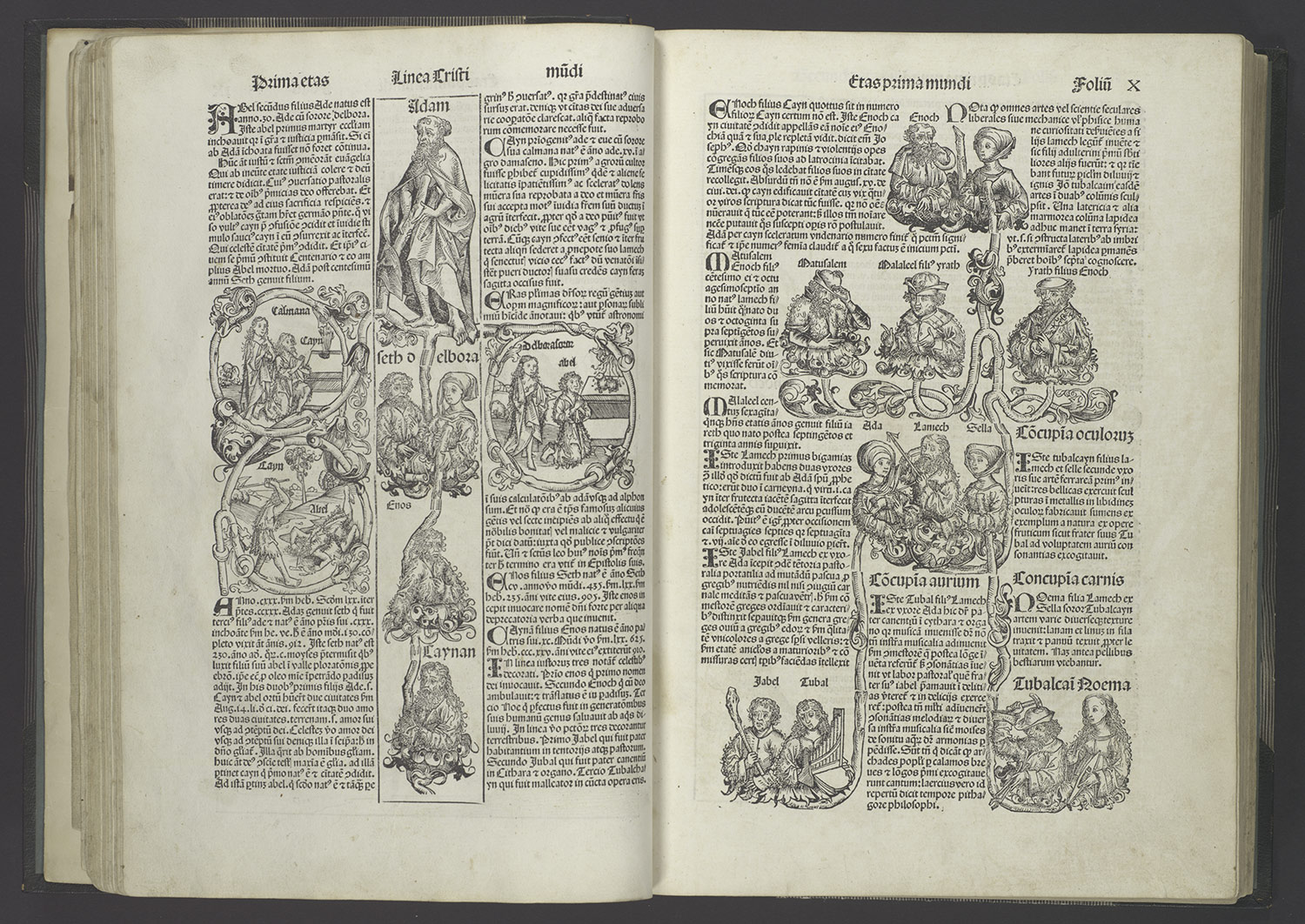
    • Liber chronicarum (Nuremberg Chronicle), 1493
      Author: Hartmann Schedel (1440–1514)
      Illustrators: Michael Wolgemut (German, 1434/37–1519) and Wilhelm Pleydenwurff (German, ca. 1460–1494)
      Nuremberg: Anton Koberger, 1493
      Printed book with woodcut illustrations


      Bound volume: 17 3/4 x 12 3/4 in. (45.2 x 32.5 cm)
      George Khuner Collection, Gift of Mrs. George Khuner, 1981 (1981.1178.29)

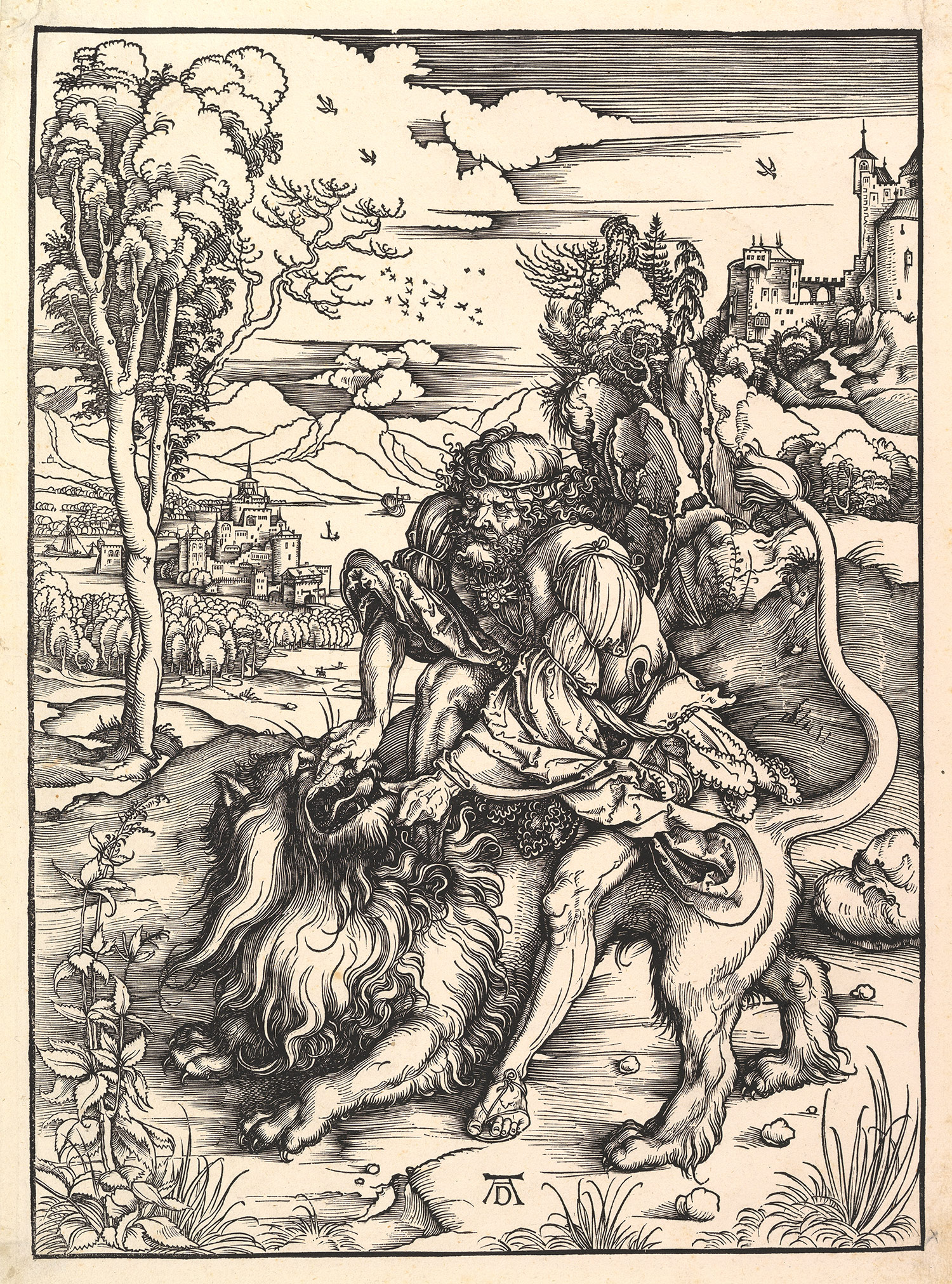
    • Samson Rending the Lion, ca. 1497–98
      Albrecht Dürer (German, 1471–1528)
      Woodcut

      sheet 16 x 11 7/8 in. (40.6 x 30.2 cm)
      Gift of Georgiana W. Sargent, in memory of John Osborne Sargent, 1924 (24.63.111)

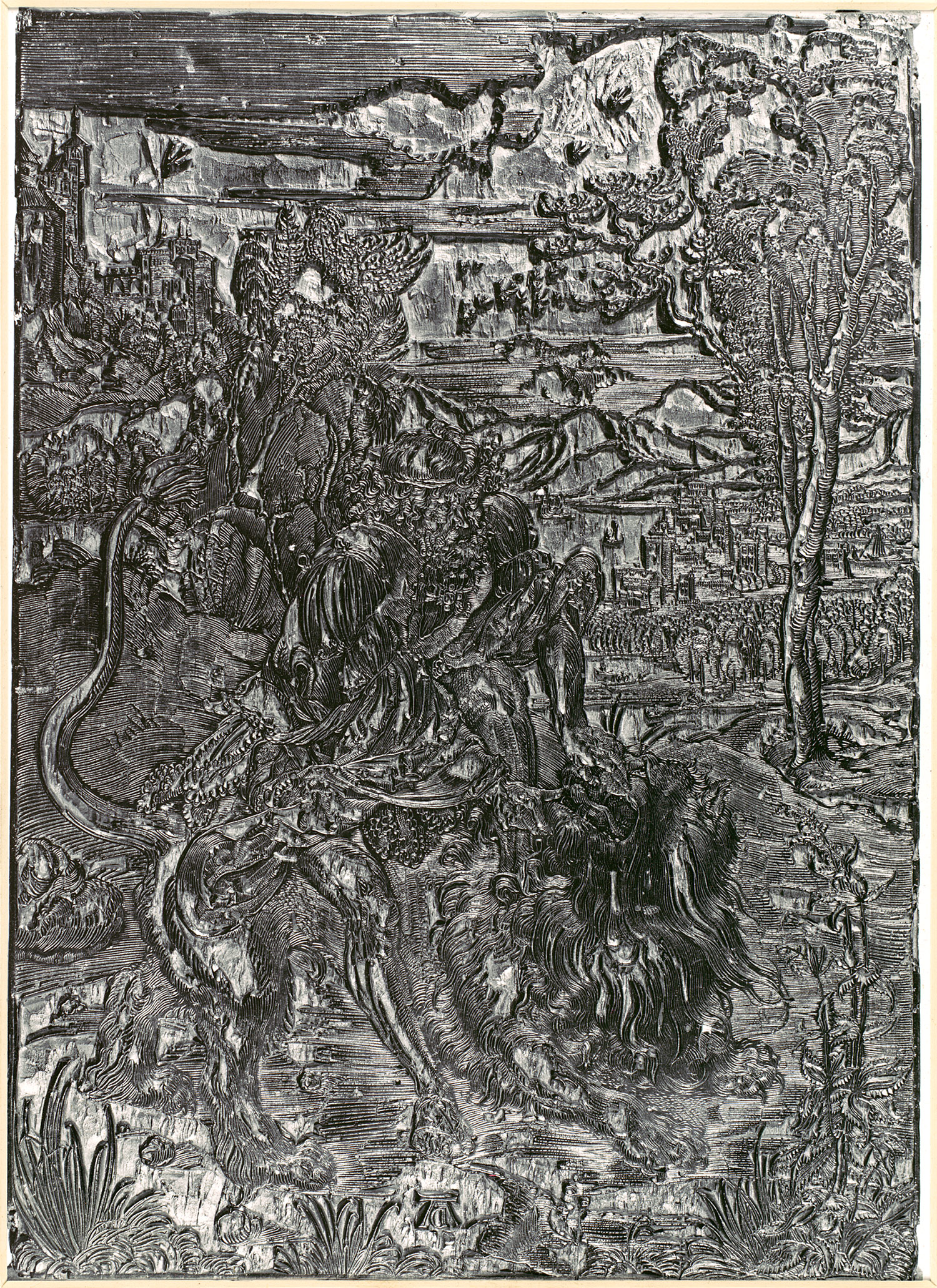
    • Woodblock for Samson Rending the Lion, ca. 1497–98
      Albrecht Dürer (German, 1471–1528)
      Pearwood

      15 1/8 x 11 in. (39 x 28 cm)
      Gift of Junius S. Morgan, 1919 (19.73.255)

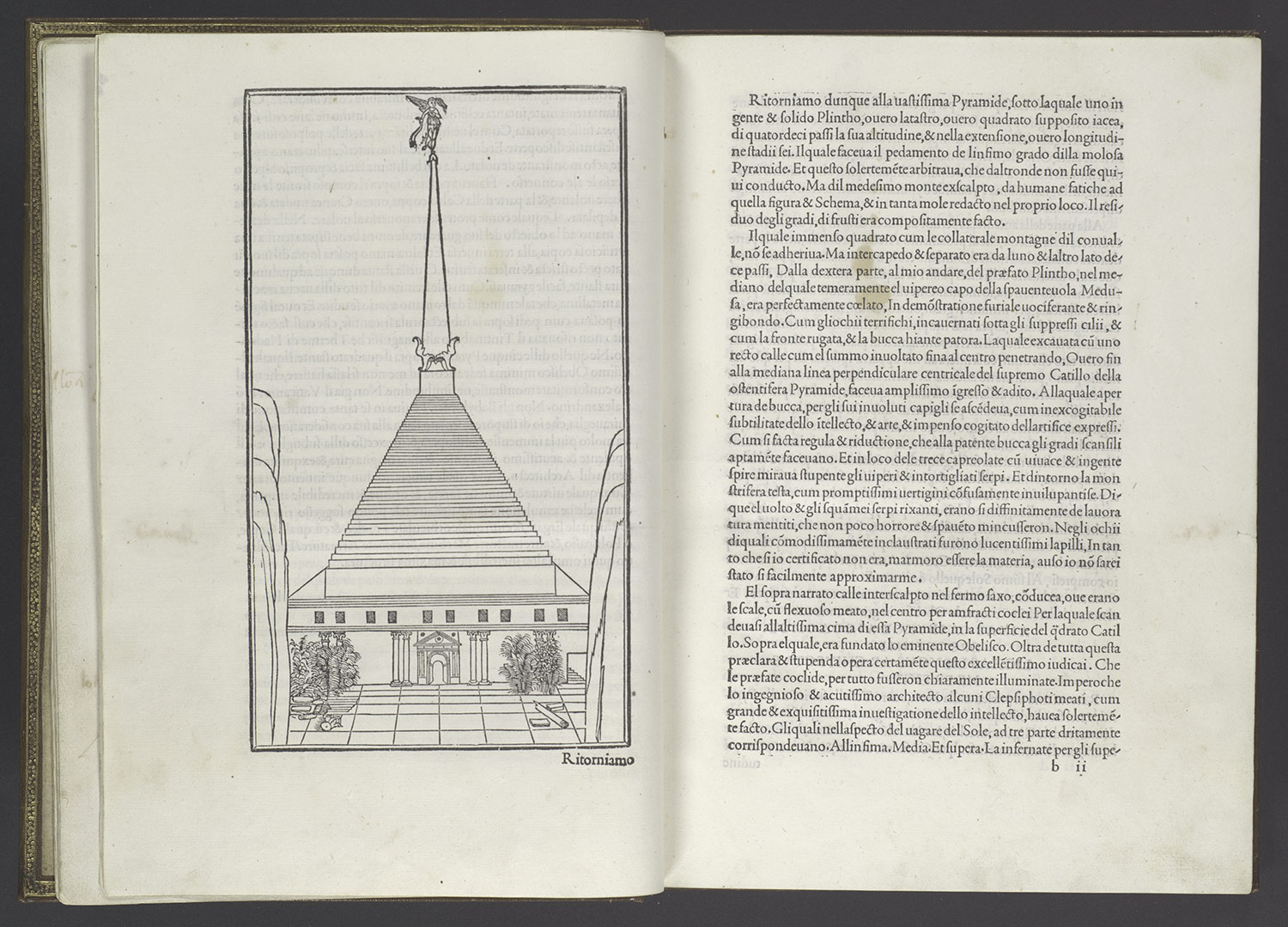
    • Hypnerotomachia Poliphili (Poliphilo's Dream about the Strife of Love)
      Author: Francesco Colonna
      Venice: Aldus Manutius, 1499
      Woodcut illustrations with printed text

      bound volume: 11 3/8 x 8 1/2 in. (29 x 21.5 cm)
      Gift of J. Pierpont Morgan, 1923 (23.73.1)

    • Scene of Witchcraft, 1510
      Hans Baldung, called Grien (German, 1484/85–1545)
      Chiaroscuro woodcut in two blocks, printed in gray and black

      15 3/8 x 10 5/8 in. (38.9 x 27 cm)
      Gift of Felix M. Warburg and his family, 1941 (41.1.201)

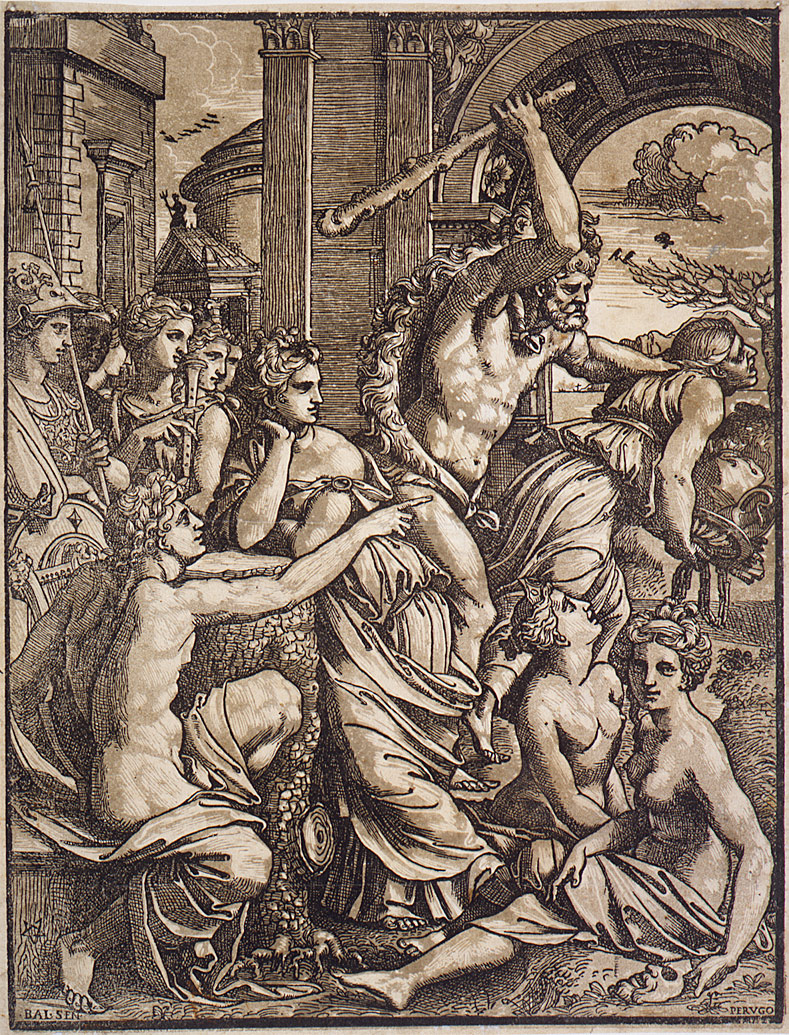
    • Hercules Chasing Avarice from the Temple of the Muses, ca. 1516–7 (?)
      Ugo da Carpi (Italian, flourished ca. 1502–32); Designed by Baldassare Tommaso Peruzzi (Italian, Sienese, 1481–1536)
      Chiaroscuro woodcut from two blocks

      11 3/4 x 9 in. (29.8 x 22.9 cm)
      Rogers Fund, 1920 (20.24.76)

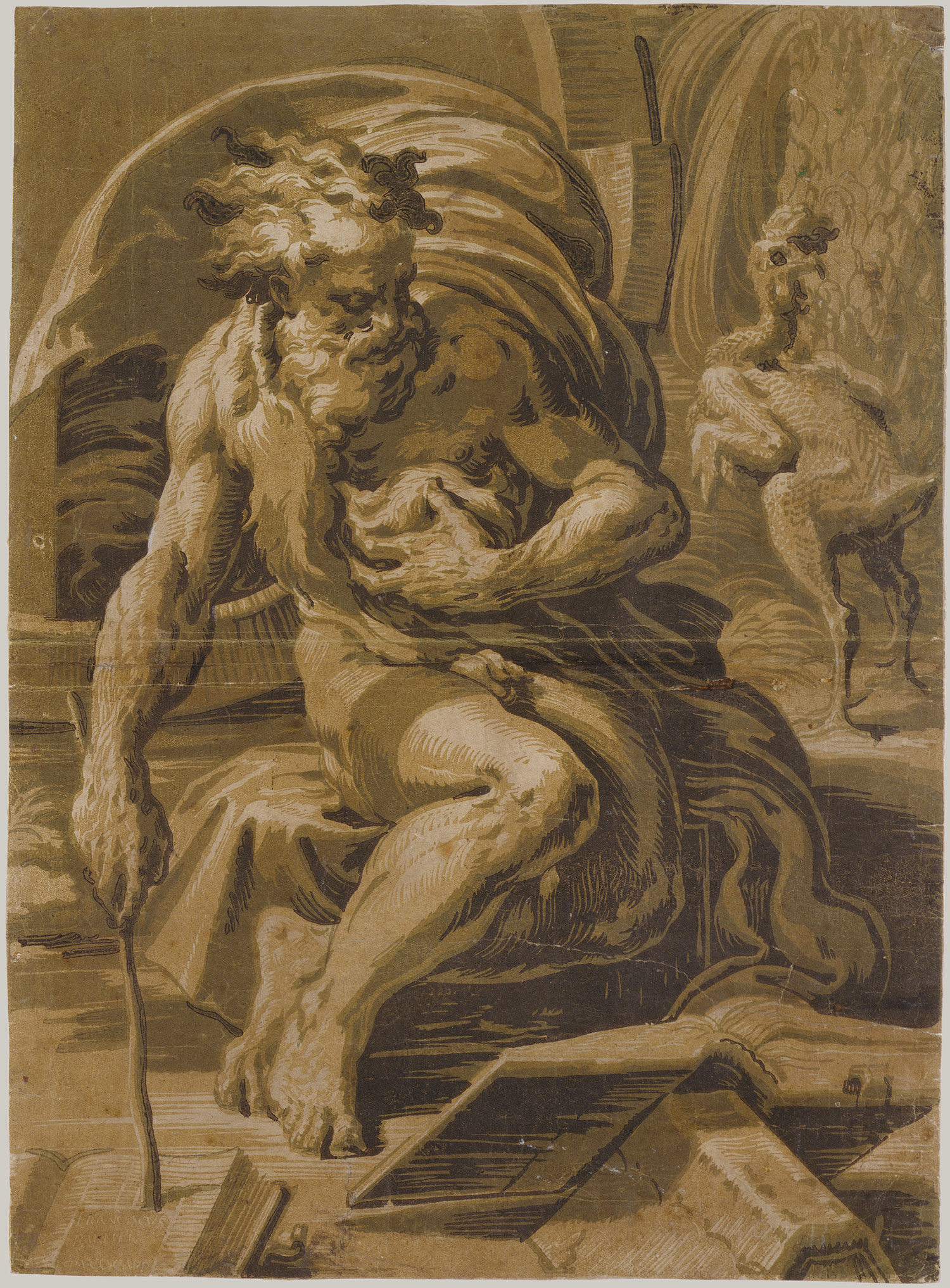
    • Diogenes, mid-1520s
      Ugo da Carpi (Italian, flourished ca. 1502–32), after Parmigianino (Girolamo Francesco Maria Mazzola) (Italian, Parma, 1503–1540)
      Chiaroscuro woodcut from four blocks, second state

      18 11/16 x 13 5/8 in. (48 x 34.6 cm)
      Purchase, Joseph Pulitzer Bequest, 1917 (17.50.1)

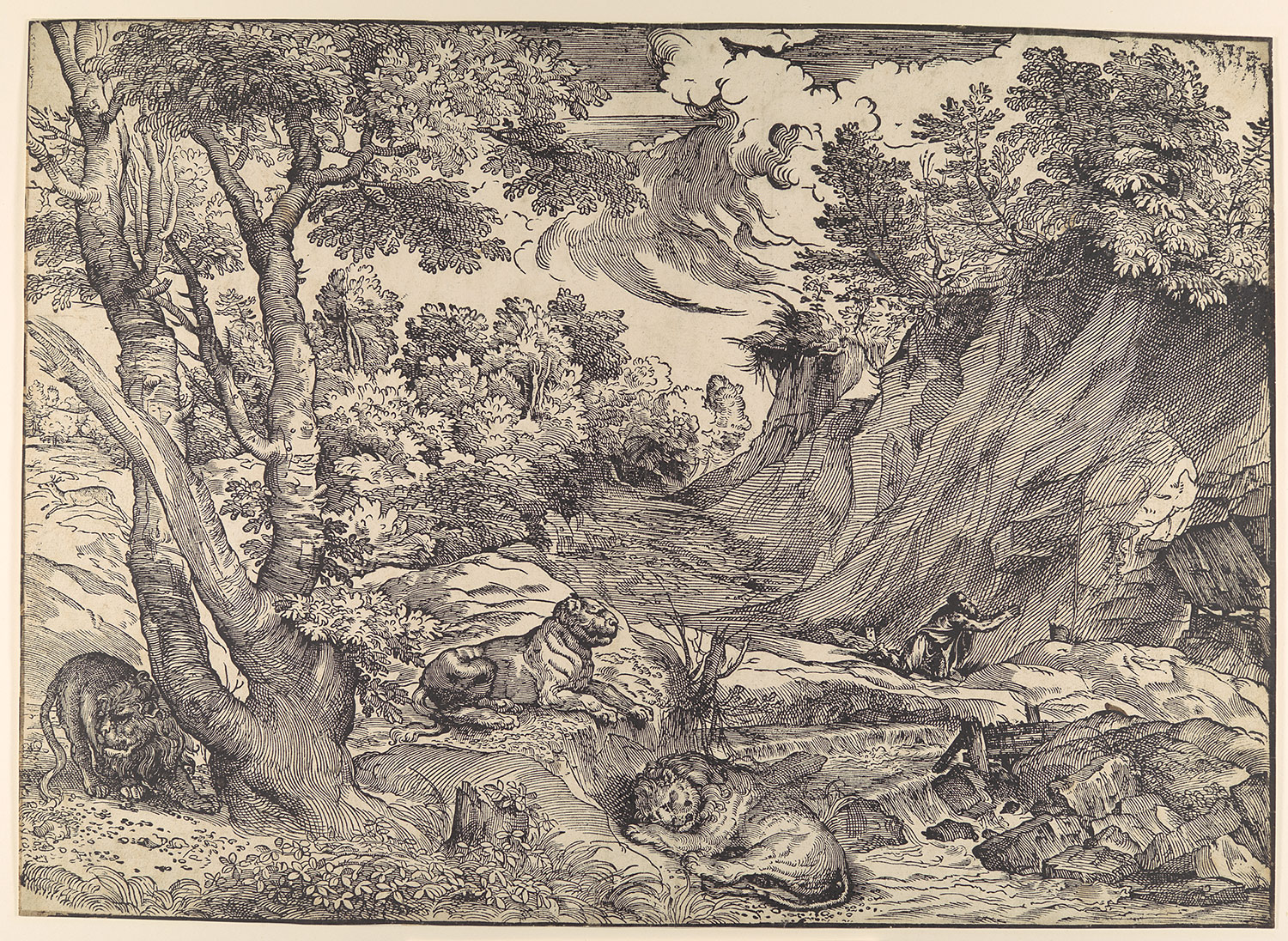
    • Saint Jerome in the Wilderness, ca. 1525–30
      Italian School, after Titian (Tiziano Vecellio) (Italian, Venetian, ca. 1488–1576)
      Woodcut

      15 1/8 x 21 1/4 in. (38.5 x 52.5 cm)
      Rogers Fund, 1922 (22.73.119)

    • The Rape of the Sabines, 1585
      Andrea Andreani (Italian, Mantuan, 1558/59–1629), after a bronze relief by Jean Boulogne, called Giambologna (Flemish, ca. 1529–1608)
      Chiaroscuro woodcut from four blocks, on three paper panels; left panel, sheet 29 3/8 x 10 1/4 in. (74.6 x 26 cm) (trimmed to block line); center panel, sheet 29 1/2 x 12 3/4 in. (74.9 x 32.4 cm) (trimmed to block line)

      right panel, sheet 29 3/4 x 13 7/8 in. (75.6 x 35.2 cm) (trimmed to block line)
      Rogers Fund, 1922 (22.73.3[73–75])

    • Impressio Librorum (Book Printing): Plate 4 of the Nova Reperta (New Discoveries)
      Theodor Galle (Flemish, 1571–1633), after Stradanus (Jan van der Straet) (Netherlandish, 1523–1605)
      Antwerp: Philips Galle, late 16th century
      Engraving

      plate: 7 7/8 x 10 3/8 in. (20 x 26.4 cm), sheet: 9 7/8 x 12 7/8 in. (25.1 x 32.8 cm)
      Harris Brisbane Dick Fund, 1934 (34.30 [5])

    • The Rape of Proserpina
      Giuseppe Scolari (Italian, Vicenzan, active late 16th–early 17th century)
      Woodcut; second state

      sheet 20 1/4 x 15 3/8 in. (51.4 x 39.1 cm)
      Rogers Fund, 1922 (22.73.3[152])

    • The Garden of Love (two parts)
      Christoffel Jegher (Flemish, 1596–1652/53), after Peter Paul Rubens (Flemish, 1577–1640)
      Woodcut

      18 1/4 x 23 3/4 in. (46.4 x 60.3 cm), 18 1/8 x 21 in. (46 x 53.5 cm)
      Harris Brisbane Dick Fund, 1930 (30.53.17a,b)

    • Sleeping Cupid, ca. 1630s
      Bartolomeo Coriolano (Italian, Bolognese, ca. 1599–ca. 1676), after Guido Reni (Italian, Bolognese, 1575–1642)
      Chiaroscuro woodcut from two blocks

      sheet 13 3/16 x 15 7/16 in. (33.5 x 39.2 cm)
      Rogers Fund, 1922 (22.73.3[107])


    Known in Japan from the eighth century, the technique of stamping from woodblocks was used to print textiles before it was applied to paper. A relief process, woodcuts are produced by inking a raised surface against which a piece of paper is pressed, either manually or by running it through a press, to create an image on the paper. The rubber stamp and potato print are familiar forms of relief printing. The design of a woodcut is produced by elimination, cutting away everything except the lines or shapes to be printed. Some idea of the technique involved can be gained by looking at the woodblock (19.73.255) that was used to print Albrecht Durer's Samson Rending the Lion (24.63.111).


    Given the difficulties of scraping out the wood between the lines to be printed, and the danger that lines that were too thin would break under pressure, early woodcuts consisted mainly of thick outlines with minimal shading.

    Related

    Timelines (8)

    • Central Europe (including Germany), 1400–1600 A.D.
    • Central Europe (including Germany), 1600–1800 A.D.
    • France, 1400–1600 A.D.
    • France, 1600–1800 A.D.
    • Low Countries, 1400–1600 A.D.
    • Low Countries, 1600–1800 A.D.
    • Venice and Northern Italy, 1400–1600 A.D.
    • Venice and Northern Italy, 1600–1800 A.D.

    Thematic Essays (33)

    • Albrecht Dürer (1471–1528)
    • Anatomy in the Renaissance
    • Art of the Pleasure Quarters and the Ukiyo–e Style
    • Dutch and Flemish Artists in Rome
    • The Eighteenth–Century Pastel Portrait
    • The Holy Roman Empire and the Habsburgs, 1400–1600
    • The Idea and Invention of the Villa
    • Images of Antiquity in Limoges Enamels in the French Renaissance
    • List of Rulers of Europe
    • Lithography in the Nineteenth Century
    • Manuscript Illumination in Northern Europe
    • The Materials and Techniques of American Quilts and Coverlets
    • Military Music in the European and American Tradition
    • Nineteenth–Century European Textile Production
    • Peter Paul Rubens (1577–1640) and Anthony van Dyck (1599–1641): Works on Paper
    • Pieter Bruegel the Elder (ca. 1525/30–1569)
    • Poets, Lovers, and Heroes in Italian Mythological Prints
    • The Print in the Nineteenth Century
    • The Printed Image in the West: Aquatint
    • The Printed Image in the West: Drypoint
    • The Printed Image in the West: Engraving
    • The Printed Image in the West: Etching
    • The Printed Image in the West: History and Techniques
    • The Printed Image in the West: Mezzotint
    • Renaissance Drawings: Material and Function
    • Textile Production in Europe: Printed, 1600–1800
    • Titian (ca. 1488–1576 a.d.)
    • Venetian Color and Florentine Design
    • Woodblock Prints in the Ukiyo–e Style
    • Woodcut Book Illustration: Florence in the 1490s
    • Woodcut Book Illustration: The First Illustrated Books in Italy
    • Woodcut Book Illustration: Venice in the 1490s
    • Woodcut Book Illustration: Venice in the Sixteenth Century

    Maps (4)

    • Europe, 1400–1600 a.d.
    • Europe, 1600–1800 a.d.
    • World, 1400–1600 a.d.
    • World, 1600–1800 a.d.

    Index Terms (21)

    Artist

    • Alberti, Leon Battista (Italian, 1406–1472)
    • Andreani, Andrea (Italian, Mantuan, 1558/59–1629)
    • Baldung, Hans, called Grien (German, 1484/85–1545)
    • Boulogne, Jean, called Giambologna (Flemish, 1529–1608, active in Italy)
    • Carpi, Ugo da (Italian, ca. 1480–after 1525)
    • Coriolano, Bartolomeo (Italian, Bolognese, ca. 1599–ca. 1676)
    • Dürer, Albrecht (German, 1471–1528)
    • Galle, Theodor (Flemish, 1571–1633)
    • Jegher, Christoffel (Flemish, 1596–1652/53)
    • Parmigianino (Girolamo Francesco Maria Mazzola) (Italian, Parma, 1503–1540)
    • Peruzzi, Baldassare Tommaso (Italian, Sienese, 1481–1536)
    • Pleydenwurff, Wilhelm (German, ca. 1460–1494)
    • Reni, Guido (Italian, 1575–1642)
    • Rubens, Peter Paul (Flemish, 1577–1640)
    • Scolari, Giuseppe (Italian, Vicenzan, 1550–1600)
    • Stradanus (Jan van der Straet) (Netherlandish, 1523–1605)
    • Titian (Tiziano Vecellio) (Italian, Venetian, ca. 1488–1576)
    • Wolgemut, Michael (German, 1434/37–1519)

    Geography/Place

    • European Renaissance Art

    Material and Technique

    • Woodcut
    • Woodcut Print from Europe

    The first crude woodcuts appeared in Europe by 1400. Given the difficulties of scraping out the wood between the lines to be printed, and the danger that lines that were too thin would break under pressure, early woodcuts consisted mainly of thick outlines with minimal shading. Resembling coloring books in their design, they were meant to be colored by hand or with stencils. Many early woodcuts served as illustrations for the new printed books, and the demands of book illustration caused the medium to become more sophisticated and its subject matter more varied. It was the brilliant German artist Albrecht Dürer who transformed the medium with woodcuts like Samson Rending the Lion, such fully realized works in black and white, complete with subtle gradations of tone and suggestions of texture, that Durer's contemporary, Erasmus of Rotterdam, claimed that to add color would be to "injure the work."

    In Italy, the woodcut was taken into new territory by the great Venetian painter Titian, who chose the medium to publicize his drawn inventions. In his beautiful Saint Jerome in the Wilderness (22.73.3-119), the bold and fluent linework, as well as the unity and animation of the entire surface, strongly suggest that Titian drew directly on the block, and the cutter followed his marks as closely as possible. It was in the medium of woodcut that color was first introduced into printmaking, in the prints known as chiaroscuro woodcuts.

    Chiaroscuro Woodcuts
    The earliest colored woodcuts were intended to imitate the appearance of a type of drawing on colored paper known as chiaroscuro, much sought after by collectors. In these drawings, the colored paper served as the middle tone, and the artist worked toward the light (chiaro) by adding highlights with white gouache, and toward the dark (scuro) by adding crosshatching in pen or a dark wash with a brush. The chiaroscuro woodcut, invented in Germany by Hans Burgkmair around 1509, was created by printing a line block—which carried the contours and crosshatching, and could sometimes stand alone as a black and white woodcut—together with one or more tone blocks. If there were only one tone block, it would print a mid-tone that would function in the same way as the colored paper did in the drawings. Where more than one tone block was used, it was possible to suggest levels of shading, as in a wash drawing. Where the blocks had been cut away, the paper would remain unprinted, and these white areas would serve as the highlights.

    One of the great masterpieces of the chiaroscuro print in the North is Hans Baldung Grien's eerie Scene of Witchcraft (41.1.201), in which the gray tone block and flickering highlights contribute to the oppressiveness of the scene. The first Italian to create chiaroscuro prints, Ugo da Carpi, is best known for his Diogenes (17.50.1), in which he does away with the line block and creates the image entirely through areas of tones. While the Diogenes is based on a wash drawing by Parmigianino, Ugo da Carpi's earliest documented chiaroscuro woodcut was produced in collaboration with Titian. However, by the end of the sixteenth century, Titian had lost interest in having the lines of his drawings duplicated through woodcut; he sought instead to have the color and effects of light of his paintings translated into the intaglio technique of engraving.

    Book Illustration
    Because the printing of movable type, like the woodcut, is a relief process, once the printing press and movable type were invented in the mid-fifteenth century, woodcuts provided the ideal means for illustrating early printed books. The woodblocks could be placed alongside the type in the flatbed press and printed at the same time. The same image could be used to illustrate more than one text or could even be used more than once in the same text, as in the lavishly illustrated Liber Chronicarum (Nuremberg Chronicle) (1981.1178.29) where the same generic view of a city is repeatedly used to signify cities whose topography was unknown. Six years later, in Venice, another landmark in the history of the illustrated book was published, the lovely Hypnerotomachia Poliphili (Poliphilo's Dream about the Strife of Love) (23.73.1). Both books are models of the successful integration of text and image into the overall layout of the page, yet they evidence very different aesthetic sensibilities. The pages of the German book are densely filled with the texture of short, angular lines that compose both the Gothic script and the lively illustrations—many pages are enlivened by genealogical trees in the form of curling vines peopled by half-length figures—to create an impression of great animation. In the Italian book, by contrast, the relationship between the rectilinear typeface, based on ancient Roman inscriptions, and the spare and elegant woodcut illustrations creates a sense of classical calm and balance.

    By the mid-sixteenth century, engraving had come to be the preferred medium for book illustration. Since engravings and type require different kinds of presses, the illustrations had to be printed independently, usually on separate sheets, and could no longer be visually integrated with the text.


    Source: The Printed Image in the West: Woodcut | Thematic Essay | Heilbrunn Timeline of Art History | The Metropolitan Museum of Art