Showing posts with label pablo picasso painting. Show all posts

PICASSO

PABLO PICASSO 1881-1973


Aden tau picasso ??
haiaaah,,,masa ga tau,.,.
he,,
ane juga baru tau maren waktu bahas L.Da VinCi,,
langsung aja Den,,,

Pelukis senantiasa bergumul dengan pertanyaan umum apa sebetulnya maksud serta tujuan seni itu. Buat apa sih Den? Apa tanpa seni orang lantas jadi bangkai? Atau ompong? Tetapi sejak penemuan fotografi, masalahnya jadi lebih jelas dan lebih urgen. Jelasnya, tujuan pelukis bukan sekedar menjiplak pemandangan alam. Sepintar-pintar pelukis seperti apa pun tidak bakalan bisa menandingi potret, baik bagusnya maupun murahnya. Karena itu, lebih dari seabad serentetan percobaan sudah dirintis orang untuk menegaskan fungsi dan daya jangkau sesuatu lukisan. Dalam gerakan ini, orang yang paling berani, paling inovatif, yang melepaskan diri jauh-jauh dari semata-mata seni yang biasa-biasa itu, dan yang dengan sendirinya paling berpengaruh, adalah Pablo Picasso.

Gaya seni Picasso dikagumi karena imaginasinya, vitalitasnya dan kepekaannya terhadap dunia luar. Picasso merupakan tokoh sentral dalam perkembangan "Kubisme," dan dia juga ternama karena kebrilianan otak serta kemampuan tekniknya. Umumnya dia diakui selaku tokoh utama dalam seni modern dan salah seorang yang paling suka kepada hal-hal baru dari semua seniman di sepanjang jaman.

Picasso punya kemampuan sempuma dalam hal lukisan gambar realistis. bila dia merasa perlu seperti itu; tetapi, lebih kerap lagi dia memilih mengacak-acak serta mengubah-ubah wajah sesuatu obyek. Pernah suatu waktu dia berkata. "Bila kumau melukis cangkir, akan kutunjukkan padamu bahwa bentuknya bundar; tetapi itu sesuatu irama umum dan konstruksi lukisan memaksa aku menunjukkan bawa yang namanya bundar itu sebagai suatu yang persegi."

Pablo Ruiz Y Picasso dilahirkan tahun 1881 di kota Malaga, Spanyol. Ayahnya seniman dan guru kesenian. Bakat Pablo muncul dalam usia muda sekali dan dia sudah jadi pelukis jempolan pada umur belasan tahun. Tahun 1904 dia menetap di Paris dan untuk selanjutnya tinggal di Perancis.

Picasso betul-betul seorang seniman yang teramat produktif. Selama kehidupannya selaku seniman yang luar biasa panjang itu --sekitar masa waktu tiga perempat abad-- dia sudah mencipta lebih dari 20.000 hasil seni yang terpisah-pisah satu sama lain, rata-rata lebih dari 5 karya dalam seminggu yang berlangsung selama 75 tahun! Sebagian terbesar dari waktu itu, karyanya selalu berdiri paling depan dalam hal harga tinggi, karena itu Picasso menjadi orang yang amat kaya raya. Dia meninggal dunia di kota Mougins, Perancis, tahun 1973.

Pokoknya, Picasso tak syak lagi seorang seniman serba bisa yang jarang tolok bandingnya. Kendati sebutan utamanya seorang pelukis, dia juga banyak melakukan karya pahat. Tambahan lagi, dia perancang panggung ballet; dia bergumul dengan seni bikin pot, meninggalkan sejumlah besar karya lithografi, lukisan melalui garis-garis dengan menggunakan pensil atau kapur tulis dari banyak cabang seni lainnya.

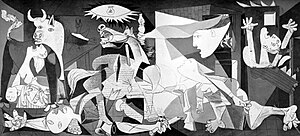
Tetapi seperti sementara seniman-seniman, Picasso juga tertarik dengan sungguh-sungguh pada masalah politik. Nyatanya, lukisan masyhurnya "Guernica" (1937), diilhami oleh kejadian-kejadian dalam perang saudara Spanyol. Beberapa hasil karya lainnya pun punya arti penting politis.

Banyak seniman-seniman masyhur ditandai oleh satu macam gaya dasar. Tidaklah demikian Picasso. Dia menampilkan ruang luas dari pelbagai gaya yang mencengangkan. Kritikus-kritikus seni memberi julukan seperti "periode biru," "periode merah muda," "periode neo-klasik" dan sebagainya. Dia merupakan salah satu dari cikal bakal "Kubisme," Dia kadang ikut serta, kadang menentang perkembangan-perkembangan baru dalam dunia lukis-melukis modern. Mungkin tak ada pelukis dalam sejarah yang sanggup melakukan karya dengan kualitas begitu tinggi dengan lewat begitu banyak gaya dan cara.

Tidak semua aliran seni punya pengaruh berjangka panjang. Meskipun Picasso disanjung-sanjung di abad ke-20, layak dipertanyakan apakah di abad-abad depan kelak penyanjungan itu masih bisa terjadi, ataukah pengaruhnya akan segera musnah dalam waktu tak lama lagi. Sudah jelas, tak ada jaminan yang meyakinkan untuk menjawab pertanyaan macam itu. Tetapi, kata sepakat dari para kritikus seni kontemporer mengatakan bahwa pengaruh Picasso akan tetap punya bobot penting di masa-masa mendatang. Walaupun jelas, kita tidak bisa memastikan kelanjutan dari bobot penting Pablo Picasso seperti bisa kita lakukan terhadap seniman-seniman yang sudah teruji oleh sang waktu.
nih Den ane beberin lukisan-lukisan beliau.,,. :


Picasso. Weeping Woman. 1937


Pablo Picasso (1881-1973). Seated Woman with Wrist Watch, 1932. Oil on canvas 51 3/16 x 38 3/16 in. (130 x 97 cm). Collection of Emily Fisher Landau © 2006 Estate of Pablo Picasso/Artists Rights Society (ARS), New York. Photograph by Jerry L. Thompson


PabloPicasso-The-Old-Guitarist-1903


PabloPicasso-Gertrude-Stein-1905-06
Commemoration and legacy pablo picasso

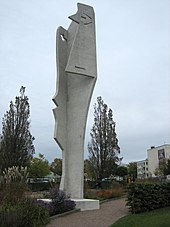
Picasso sculpture in Halmstad

Picasso was exceptionally prolific throughout his long lifetime. The total number of artworks he produced has been estimated at 50,000, comprising 1,885 paintings; 1,228 sculptures; 2,880 ceramics, roughly 12,000 drawings, many thousands of prints, and numerous tapestries and rugs.[45] At the time of his death many of his paintings were in his possession, as he had kept off the art market what he did not need to sell. In addition, Picasso had a considerable collection of the work of other famous artists, some his contemporaries, such as Henri Matisse, with whom he had exchanged works. Since Picasso left no will, his death duties (estate tax) to the French state were paid in the form of his works and others from his collection. These works form the core of the immense and representative collection of the Musée Picasso in Paris. In 2003, relatives of Picasso inaugurated a museum dedicated to him in his birthplace, Málaga, Spain, the Museo Picasso Málaga.

The Museu Picasso in Barcelona features many of Picasso’s early works, created while he was living in Spain, including many rarely seen works which reveal Picasso’s firm grounding in classical techniques. The museum also holds many precise and detailed figure studies done in his youth under his father’s tutelage, as well as the extensive collection of Jaime Sabartés, Picasso’s close friend and personal secretary.

Several paintings by Picasso rank among the most expensive paintings in the world. Garçon à la pipe sold for US$104 million at Sotheby's on 4 May 2004, establishing a new price record. Dora Maar au Chat sold for US$95.2 million at Sotheby’s on 3 May 2006.[46] On 4 May 2010, Nude, Green Leaves and Bust was sold at Christie's for $106.5 million. The 1932 work, which depicts Picasso's mistress Marie-Thérèse Walter reclining and as a bust, was in the personal collection of Los Angeles philanthropist Frances Lasker Brody, who died in November 2009. Christie's won the rights to auction the collection against London-based Sotheby's. The collection as a whole was valued at over $150 million, while the work was originally expected to earn $80 million at auction.[47] There were more than half a dozen bidders, while the winning bid was taken via telephone.[48][49] The previous auction record ($104.3 million) was set in February 2010, by Alberto Giacometti's Walking Man I.[50]

As of 2004, Picasso remains the top ranked artist (based on sales of his works at auctions) according to the Art Market Trends report.[51] More of his paintings have been stolen than those by any other artist;[52] the Art Loss Register has 550 of his works listed as missing.[53]

The Picasso Administration functions as his official Estate. The U.S. copyright representative for the Picasso Administration is the Artists Rights Society.[54]

In the 1996 movie Surviving Picasso, Picasso is portrayed by actor Anthony Hopkins.

Between October 8, 2010 and January 17, 2011, an exhibition of 150 paintings, sculptures, drawings, prints and photographs from the Museé National Picasso in Paris will be on display at the Seattle Art Museum. From Feb 19, 2011 to May 15, 2011, the exhibition from the Museé National Picasso will move to Richmond, VA and be on display at the Virginia Museum of Fine Arts for its only appearance on the east coast of the United States.[55]

Art is a lie that makes us realize the truth

Art

Art is a lie that makes us realize the truth.
— Pablo Picasso [32]

Picasso’s work is often categorized into periods. While the names of many of his later periods are debated, the most commonly accepted periods in his work are the Blue Period (1901–1904), the Rose Period (1905–1907), the African-influenced Period (1908–1909), Analytic Cubism (1909–1912), and Synthetic Cubism (1912–1919).

In 1939–40 the Museum of Modern Art in New York City, under its director Alfred Barr, a Picasso enthusiast, held a major and highly successful retrospective of his principal works up until that time. This exhibition lionized the artist, brought into full public view in America the scope of his artistry, and resulted in a reinterpretation of his work by contemporary art historians and scholars.[33]

Before 1901

Picasso’s training under his father began before 1890. His progress can be traced in the collection of early works now held by the Museu Picasso in Barcelona, which provides one of the most comprehensive records extant of any major artist’s beginnings.[34] During 1893 the juvenile quality of his earliest work falls away, and by 1894 his career as a painter can be said to have begun.[35] The academic realism apparent in the works of the mid-1890s is well displayed in The First Communion (1896), a large composition that depicts his sister, Lola. In the same year, at the age of 14, he painted Portrait of Aunt Pepa, a vigorous and dramatic portrait that Juan-Eduardo Cirlot has called “without a doubt one of the greatest in the whole history of Spanish painting.”[36]

In 1897 his realism became tinged with Symbolist influence, in a series of landscape paintings rendered in non naturalistic violet and green tones. What some call his Modernist period (1899–1900) followed. His exposure to the work of Rossetti, Steinlen, Toulouse-Lautrec and Edvard Munch, combined with his admiration for favorite old masters such as El Greco, led Picasso to a personal version of modernism in his works of this period.[37]

Blue Period

La Vie (1903), Cleveland Museum of Art
Femme aux Bras Croisés, 1902

Picasso’s Blue Period (1901–1904) consists of somber paintings rendered in shades of blue and blue-green, only occasionally warmed by other colors. This period’s starting point is uncertain; it may have begun in Spain in the spring of 1901, or in Paris in the second half of the year.[38] Many paintings of gaunt mothers with children date from this period. In his austere use of color and sometimes doleful subject matter—prostitutes and beggars are frequent subjects—Picasso was influenced by a trip through Spain and by the suicide of his friend Carlos Casagemas. Starting in autumn of 1901 he painted several posthumous portraits of Casagemas, culminating in the gloomy allegorical painting La Vie (1903),[39] now in the Cleveland Museum of Art.[40]

The same mood pervades the well-known etching The Frugal Repast (1904),[41] which depicts a blind man and a sighted woman, both emaciated, seated at a nearly bare table. Blindness is a recurrent theme in Picasso’s works of this period, also represented in The Blindman’s Meal (1903, the Metropolitan Museum of Art) and in the portrait of Celestina (1903). Other works include Portrait of Soler and Portrait of Suzanne Bloch‎.

Rose Period

Pablo Picasso, Garçon à la pipe, (Boy with a Pipe), 1905, Rose Period

The Rose Period (1904–1906)[42] is characterized by a more cheery style with orange and pink colors, and featuring many circus people, acrobats and harlequins known in France as saltimbanques. The harlequin, a comedic character usually depicted in checkered patterned clothing, became a personal symbol for Picasso. Picasso met Fernande Olivier, a model for sculptors and artists, in Paris in 1904, and many of these paintings are influenced by his warm relationship with her, in addition to his increased exposure to French painting. The generally upbeat and optimistic mood of paintings in this period is reminiscent of the 1899–1901 period (i.e. just prior to the Blue Period) and 1904 can be considered a transition year between the two periods.

African-influenced Period

Les Demoiselles d'Avignon (1907), Museum of Modern Art, New York

Picasso’s African-influenced Period (1907–1909) begins with the two figures on the right in his painting, Les Demoiselles d'Avignon, which were inspired by African artifacts. Formal ideas developed during this period lead directly into the Cubist period that follows.

Cubism

Three Musicians (1921), Museum of Modern Art

Analytic cubism (1909–1912) is a style of painting Picasso developed along with Georges Braque using monochrome brownish and neutral colors. Both artists took apart objects and “analyzed” them in terms of their shapes. Picasso and Braque’s paintings at this time have many similarities. Synthetic cubism (1912–1919) was a further development of the genre, in which cut paper fragments—often wallpaper or portions of newspaper pages—were pasted into compositions, marking the first use of collage in fine art.

Classicism and surrealism

In the period following the upheaval of World War I, Picasso produced work in a neoclassical style. This “return to order” is evident in the work of many European artists in the 1920s, including André Derain, Giorgio de Chirico, and the artists of the New Objectivity movement. Picasso’s paintings and drawings from this period frequently recall the work of Ingres.

During the 1930s, the minotaur replaced the harlequin as a common motif in his work. His use of the minotaur came partly from his contact with the surrealists, who often used it as their symbol, and it appears in Picasso’s Guernica.

Guernica, 1937, Museo Reina Sofia

Arguably Picasso’s most famous work is his depiction of the German bombing of Guernica during the Spanish Civil War—Guernica. This large canvas embodies for many the inhumanity, brutality and hopelessness of war. Asked to explain its symbolism, Picasso said, “It isn’t up to the painter to define the symbols. Otherwise it would be better if he wrote them out in so many words! The public who look at the picture must interpret the symbols as they understand them.”[43][44]

Guernica hung in New York’s Museum of Modern Art for many years. In 1981 Guernica was returned to Spain and exhibited at the Casón del Buen Retiro. In 1992 the painting hung in Madrid’s Reina Sofía Museum when it opened.

Later works

The Chicago Picasso a 50' high public Cubist sculpture. Donated by Picasso to the people of Chicago

Picasso was one of 250 sculptors who exhibited in the 3rd Sculpture International held at the Philadelphia Museum of Art in mid-1949. In the 1950s, Picasso’s style changed once again, as he took to producing reinterpretations of the art of the great masters. He made a series of works based on Velazquez’s painting of Las Meninas. He also based paintings on works by Goya, Poussin, Manet, Courbet and Delacroix.

Nude Woman with a Necklace (1968), Tate

He was commissioned to make a maquette for a huge 50-foot (15 m)-high public sculpture to be built in Chicago, known usually as the Chicago Picasso. He approached the project with a great deal of enthusiasm, designing a sculpture which was ambiguous and somewhat controversial. What the figure represents is not known; it could be a bird, a horse, a woman or a totally abstract shape. The sculpture, one of the most recognizable landmarks in downtown Chicago, was unveiled in 1967. Picasso refused to be paid $100,000 for it, donating it to the people of the city.

Baboon and Young (1951) - Museum of Contemporary Arts - Tehran / Iran

Picasso’s final works were a mixture of styles, his means of expression in constant flux until the end of his life. Devoting his full energies to his work, Picasso became more daring, his works more colorful and expressive, and from 1968 through 1971 he produced a torrent of paintings and hundreds of copperplate etchings. At the time these works were dismissed by most as pornographic fantasies of an impotent old man or the slapdash works of an artist who was past his prime. Only later, after Picasso’s death, when the rest of the art world had moved on from abstract expressionism, did the critical community come to see that Picasso had already discovered neo-expressionism and was, as so often before, ahead of his time.

profile Pablo Picasso Political views


Pablo Picasso, Massacre in Korea, 1951

Picasso remained neutral during World War I, the Spanish Civil War, and World War II, refusing to fight for any side or country. As a Spanish citizen living in France, Picasso was under no compulsion to fight against the invading Germans in either World War. In the Spanish Civil War, service for Spaniards living abroad was optional and would have involved a voluntary return to the country to join either side. While Picasso expressed anger and condemnation of Francisco Franco and fascists through his art, he did not take up arms against them. He also remained aloof from the Catalan independence movement during his youth despite expressing general support and being friendly with activists within it.

In 1944 Picasso joined the French Communist Party, attended an international peace conference in Poland, and in 1950 received the Lenin Peace Prize from the Soviet government.[21] But party criticism of a portrait of Stalin as insufficiently realistic cooled Picasso’s interest in communist politics, though he remained a loyal member of the Communist Party until his death. In a 1945 interview with Jerome Seckler, Picasso stated: “I am a Communist and my painting is Communist painting. ... But if I were a shoemaker, Royalist or Communist or anything else, I would not necessarily hammer my shoes in a special way to show my politics.”[22] His Communist militancy, not uncommon among intellectuals and artists at the time although it was officially banned in Francoist Spain, has long been the subject of some controversy; a notable source or demonstration thereof was a sarcastic quote commonly attributed to Salvador Dalí (with whom Picasso had a rather strained relationship[23]), ostensibly casting doubt on the true honesty of his political allegiances:

Picasso es pintor, yo también; [...] Picasso es español, yo también; Picasso es comunista, yo tampoco.
(Picasso is a painter, so am I; [...] Picasso is a Spaniard, so am I; Picasso is a communist, neither am I.) [24][25][26][27][28][29]

According to Jean Cocteau's diaries, Picasso once said to him in reference to the communists: "I have joined a family, and like all families, it's full of shit".[30]

He was against the intervention of the United Nations and the United States[31] in the Korean War and he depicted it in Massacre in Korea. In 1962, he received the International Lenin Peace Prize.

profile Pablo Picasso Early life

Picasso was baptized Pablo Diego José Francisco de Paula Juan Nepomuceno María de los Remedios Crispiniano de la Santísima Trinidad, a series of names honoring various saints and relatives.[2] Added to these were Ruiz and Picasso, for his father and mother, respectively, as per Spanish law. Born in the city of Málaga in the Andalusian region of Spain, he was the first child of Don José Ruiz y Blasco (1838–1913) and María Picasso y López.[3] Picasso’s family was middle-class. His father was a painter who specialized in naturalistic depictions of birds and other game. For most of his life Ruiz was a professor of art at the School of Crafts and a curator of a local museum. Ruiz’s ancestors were minor aristocrats.

The house where Picasso was born, in Málaga

Picasso showed a passion and a skill for drawing from an early age. According to his mother, his first words were “piz, piz”, a shortening of lápiz, the Spanish word for ‘pencil’.[4] From the age of seven, Picasso received formal artistic training from his father in figure drawing and oil painting. Ruiz was a traditional, academic artist and instructor who believed that proper training required disciplined copying of the masters, and drawing the human body from plaster casts and live models. His son became preoccupied with art to the detriment of his classwork.

The family moved to A Coruña in 1891, where his father became a professor at the School of Fine Arts. They stayed almost four years. On one occasion the father found his son painting over his unfinished sketch of a pigeon. Observing the precision of his son’s technique, an apocryphal story relates that Ruiz felt that the thirteen-year-old Picasso had surpassed him, and vowed to give up painting,[5] though paintings by Ruiz exist from later years.

In 1895, Picasso was traumatized when his seven-year old sister, Conchita, died of diphtheria.[6] After her death, the family moved to Barcelona, where Ruiz took a position at its School of Fine Arts. Picasso thrived in the city, regarding it in times of sadness or nostalgia as his true home.[7] Ruiz persuaded the officials at the academy to allow his son to take an entrance exam for the advanced class. This process often took students a month, but Picasso completed it in a week, and the impressed jury admitted Picasso, who was 13. The student lacked discipline but made friendships that would affect him in later life. His father rented him a small room close to home so Picasso could work alone, yet Ruiz checked up on him numerous times a day, judging his son’s drawings. The two argued frequently.

Picasso’s father and uncle decided to send the young artist to Madrid’s Royal Academy of San Fernando, the country's foremost art school.[7] At age 16, Picasso set off for the first time on his own, but he disliked formal instruction and quit attending classes soon after enrollment. Madrid, however, held many other attractions. The Prado housed paintings by Diego Velázquez, Francisco Goya, and Francisco Zurbarán. Picasso especially admired the works of El Greco; elements like the elongated limbs, arresting colors, and mystical visages are echoed in Picasso’s later work.

profile Pablo Picasso

Pablo Picasso

Pablo Picasso in 1962
Birth name Pablo Diego José Francisco de Paula Juan Nepomuceno María de los Remedios Cipriano de la Santísima Trinidad Ruiz y Picasso[1]
Born 25 October 1881(1881-10-25)
Málaga, Spain
Died 8 April 1973(1973-04-08) (aged 91)
Mougins, France
Nationality Spanish
Field Painting, Drawing, Sculpture, Printmaking, Ceramics
Training José Ruiz y Blasco (father),
Real Academia de Bellas Artes de San Fernando
Movement Cubism
Works Les Demoiselles d'Avignon (1907)
Guernica (1937)
The Weeping Woman (1937)

Pablo Diego José Francisco de Paula Juan Nepomuceno María de los Remedios Cipriano de la Santísima Trinidad Ruiz y Picasso known as Pablo Ruiz Picasso (Spanish pronunciation: [ˈpaβlo ˈrwiθ piˈkaso]; 25 October 1881 – 8 April 1973) was a Spanish painter, draughtsman, and sculptor who lived most of his adult life in France. He is best known for co-founding the Cubist movement, and for the wide variety of styles that he helped develop and worked in. Among his most famous works are the proto-Cubist Les Demoiselles d'Avignon (1907) and Guernica (1937), a portrayal of the German bombing of Guernica during the Spanish Civil War.

Picasso demonstrated uncanny artistic talent in his early years, painting in a realistic manner through his childhood and adolescence; during the first decade of the 20th century his style changed as he experimented with different theories, techniques, and ideas. His revolutionary artistic accomplishments brought him universal renown and immense fortune throughout his life, making him one of the best-known figures in 20th century art.

pablo picasso painting

The Male vs Female Gaze

At left: Girl before a mirror by Pablo Picasso.

When I first saw the Picasso painting, I didn't know squat about art or cubism, but I remember thinking, "She doesn't like what she sees." (Rorschach test, anyone?)

In the discussion over my last post (about the Michigan Womyn's Music Festival), a related issue came up: Do we feel our appearance is judged more harshly by women or by men?

Maggie Jochild wrote:

I was not visibly disabled the first time I went to Michigan in 1977, but I was fat. Very fat. And it was the first place in my life where I ever went naked in public -- even with my lovers, I'd not shown my body. Michigan created enough safety for that to occur. It was also where I learned that women have beards, have mustaches, have flat chests, have enlarged clitorises, have mastectomy scars, have unimaginable scars (like I now have), have every kind of body type you can imagine, -- that women often look like what our culture calls "men" -- because bodies are on full view and it's just not voyeuristic. We come out of our mothers this way. It was tremendously validating and educational.

**
I am now really fond of nudism, and have often gone to events where clothing is optional. And the fact is, at venues where men are present (even or sometimes especially leftie/gay men), I get snickered at. Always by a man. NEVER by women. I do believe this is conditioning -- and what I refer to as ideology is conditioning, not hard-wired into any brain -- but it's so entrenched and laid in so early, the only way around it is a complete re-do of identity. NOT appearance.

Others immediately disagreed. Bint commented:
I have often had my body ridiculed by women. I remember when I was going through radiation and the skin on my back was burned to a crisp. It wasn't a bit contagious or oozing, just charred. I was engaged and had gone to try on wedding gowns. Of the people who saw me in that store, daring to show my non-conforming body, feel free to guess the gender of the person I could see sneering at me when I turned around to face them. I could give even more accounts of situations like this. The idea that men are conditioned to be less accepting to variations on body types is a joke to me and many other women of color and women with disabilities.

Octagalore has also felt more *judgment* from women:
Bint: I too think what you said was very reasonable, especially the above. Most of my friends are women -- I'm not someone who claims "women don't get me" -- in fact, women usually get me better. But I've also gotten the most heartbreak from them.

I was horribly unpopular in grade school through high school. Although I became identifiably conventionally attractive during this period, I was very "different" in religion, how my parents dressed me (awful crocheted ponchos, "interesting" ethnic outfits) and in other ways. New boys would come to the school, hang out with me, then inevitably a girl would tell them how weird and oddly-dressed and outcast-y I was and they'd back off. High school was more of the same.

How about you? More nasty comments from men or women? Has that changed since you have aged vs when you were young?

If you agree with Bint and Octagalore, do you think women's negative judgments are due to oppression and rivalry, or is this just because we are also so hard on ourselves? After staring at ourselves in the mirror a long time, it seems likely we have developed a hypersensitive awareness of physical appearance, which we then turn on each other.

On the other hand, men have this way of humiliating women that, for me, far exceeds anything women do. It just feels different. The misogyny? Aggressive language? The tone of voice? I'm not sure why. Is there a possibly-physical threat present in men's statements, that is not present in women's?

As a child, were you ever picked on for looking different? Did this come from boys or girls, mostly?

On a related note: Do lesbians have more positive experiences with other girls, regarding personal appearance, than hetero girls? I'd be curious to know if lesbians ever wanted to tell their friends they were pretty, but refrained from doing so. Or did you go ahead? As a child, I had a friend who always told me I was "pretty like a doll" (I wasn't, but I loved hearing it), and I have always wondered if she grew up to be a lesbian or was just being a nice friend.